Juneteenth: freedom and the written record
A handwritten order, a turning point in Texas, and a reminder to read the whole historical record.
Black History Lesson Lab Editorial ·
A date, and a document
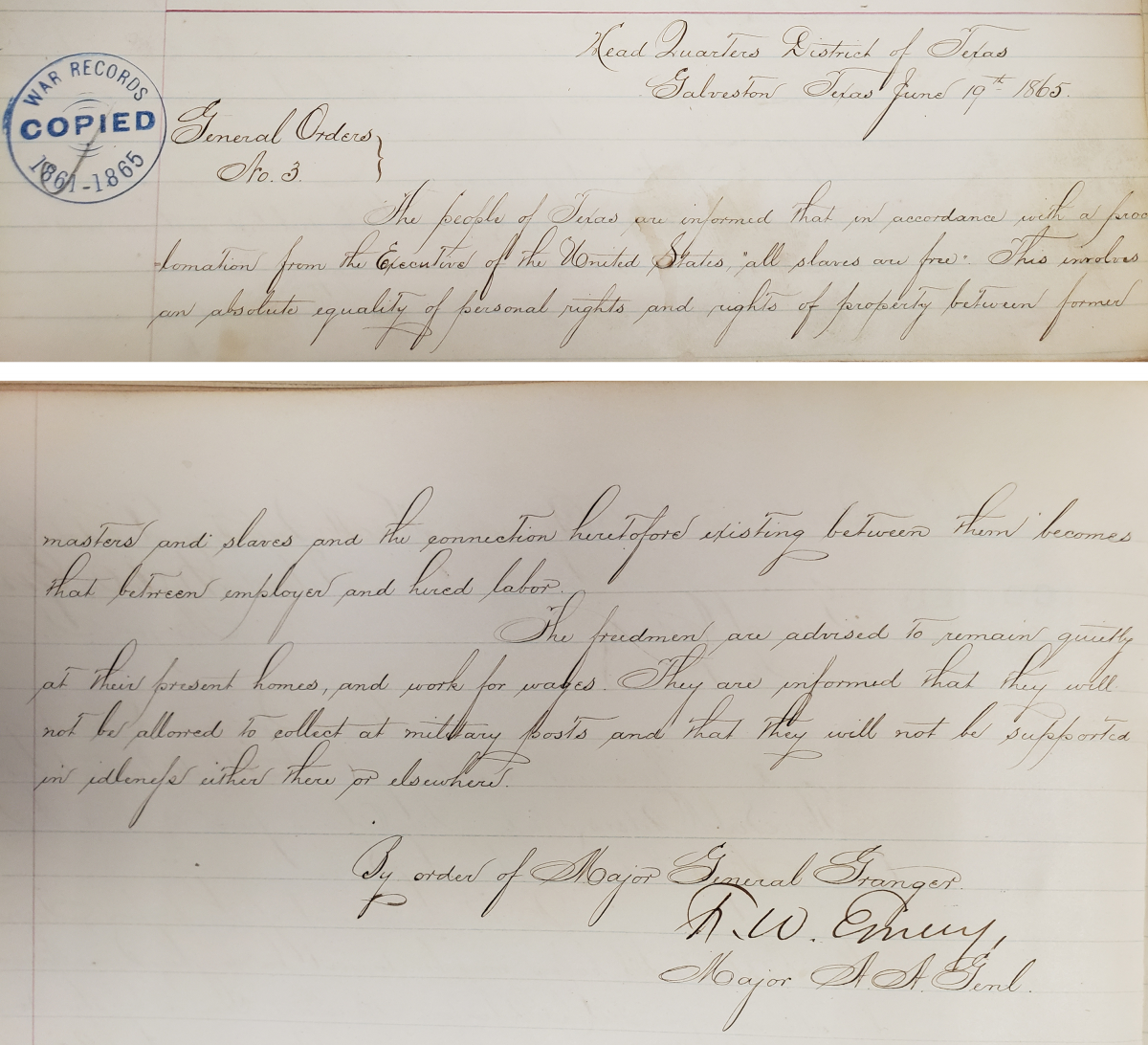
On June 19, 1865, U.S. Major General Gordon Granger issued General Order No. 3, informing the people of Texas that enslaved people were free. According to the National Archives, his troops had arrived in Galveston the previous day.
The order came two and a half years after the Emancipation Proclamation. June 19 became known as Juneteenth, a name that combines June and nineteenth.
Read beyond the first sentence
The order announced freedom and described an ‘absolute equality of personal rights and rights of property’ between formerly enslaved people and enslavers. But it also instructed freed people to stay at their homes and work for wages.
The National Archives account draws attention to the racist language in the final sentences. Reading the complete document, rather than only its announcement of freedom, reveals why the struggle for equal rights continued.
A record preserved, a history remembered
The original handwritten record is held by the National Archives. Juneteenth celebrations began in Texas in 1866 and later spread to other states. Legislation signed on June 17, 2021, made Juneteenth a federal holiday.
A question to carry with you
What can a document announce—and what can it leave unresolved? Compare the promise of freedom in the order with the instructions that follow it.
Sources & further reading
Source text reviewed against the linked institutional record on 23 November 2026. This is a short source-based foundation entry, not a comprehensive account.