Reading the march through its signs
Look closely at a photograph from the 1963 March on Washington—and the demands its participants carried.
Black History Lesson Lab Editorial ·
A photograph of public demands
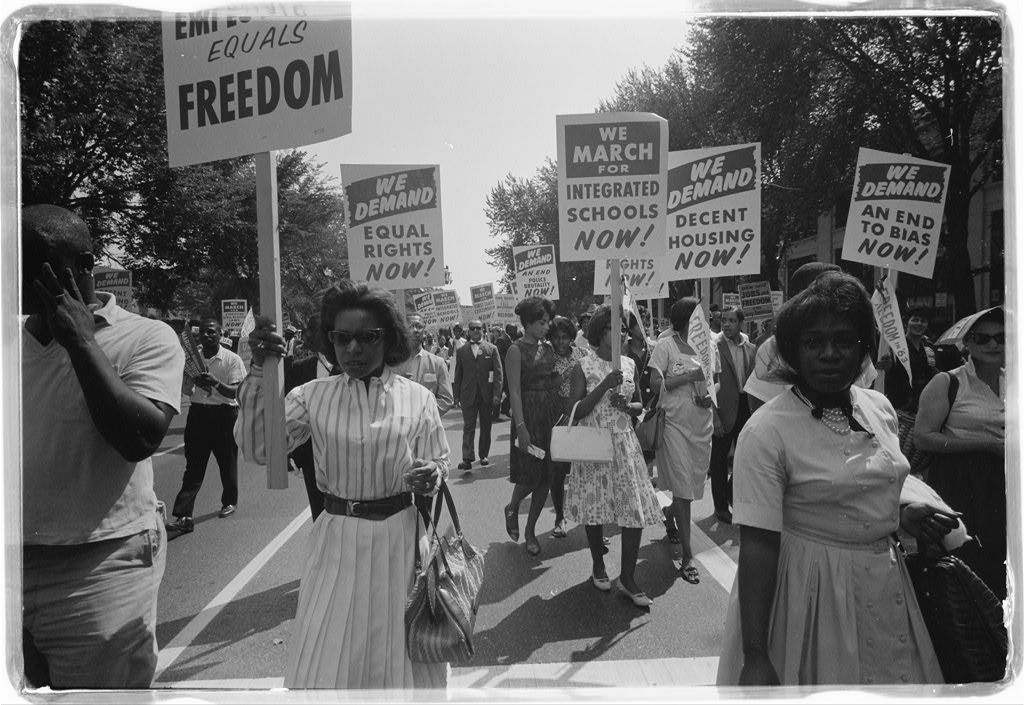
Warren K. Leffler photographed this procession at the March on Washington on August 28, 1963. The Library of Congress describes participants carrying signs for equal rights, integrated schools, decent housing, and an end to bias.
Reading those signs shifts our attention from a single famous speech to the demands of the people in the crowd. The photograph is evidence of the messages they chose to carry in public.
Notice the people, too
The Library of Congress identifies the two women in the foreground as sisters Elsie Eatman and Delores Coleman. Naming them reminds us that a historical crowd is made up of individual people.
What the frame cannot tell us
A photograph records a moment, not an entire movement. It cannot by itself explain every participant’s experience, the organizing before the march, or the changes that followed.
Start with what is visible. Then consult the date, creator, description, and related records. Keeping observation separate from inference is one way to read photographs responsibly.
Look closer
Which demand can you read on a sign? What question would you ask before drawing a broader conclusion about the event?
Sources & further reading
Source text reviewed against the linked institutional record on 23 November 2026. This is a short source-based foundation entry, not a comprehensive account.